Expo 2027 Belgrade runs from 15 May to 15 August 2027 under the theme "Play for Humanity: Sport and Music for All". The idea is that play – in sport, music, learning and everyday life – is not a pastime but a tool for making people and communities more resilient. Every pavilion, stage and programme on the Surčin site is meant to answer that idea in its own way.
What does "Play for Humanity" actually mean?
Every Expo is organised around a theme that participating countries must address. Belgrade's theme was designed, according to the Bureau International des Expositions (BIE), to explore how humanity can use the power of play to build the resilience of individuals and communities in an insecure world. The BIE describes play as a "superpower of the future" that lets people create, innovate and grow.
The official problem statement that countries are asked to respond to is broad: how to prepare the human body, mind and logic for a technology-led world full of insecurities, and make them more resilient for the coming decades.
The organiser, EXPO 2027 d.o.o. Beograd, frames the programme as a response to a set of connected problems:
- declining mental and physical health
- loss of social cohesion and belonging
- outdated and unequal education systems
- technology that undermines human values
- a general sense of "permacrisis" and burnout
- fragile and unsustainable economic models
Sport and music are the two concrete channels through which the theme is meant to reach visitors, but the organiser also includes education, innovation and business under the same umbrella.
How is the theme divided into sub-themes?
The theme is split into three sub-themes, each with its own focus and its own programme weeks:
- Power of Play – play as a path to healing and sustainability. Theme weeks: Play for Resilience and Play for Sustainability.
- Play for Progress – play as a driver of innovation and imagination. Theme weeks: Play for Innovators and Play for Future Visionaries.
- Play Together – play as a way of bringing people and communities together. Theme weeks: Play for Active Society and Play for Peace.
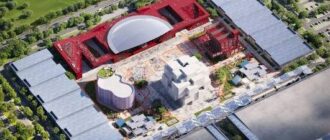
These sub-themes guide the flow of events during the thematic weeks of the Expo, so the emphasis of the programme will shift over the 93 days. Each sub-theme also has a thematic pavilion of the same name, built by the organiser. In the BIE's description of the site, the main theme pavilions and the Serbian National Pavilion sit around a large circular plaza at the end of a covered central street, as the architectural focal points of the complex.
Why did Serbia choose play as a theme?
The organiser says the theme was what set Serbia's bid apart when Belgrade was elected host on 21 June 2023, against bids from the United States, Spain, Thailand and Argentina. Its argument is that the theme is broad and participatory: instead of only exhibiting, countries are encouraged to create activities in which visitors take an active role.
This is a deliberate break from Expos built mainly around technology or the environment. Sport and music were chosen because they cross language and cultural barriers, and because both are strong parts of Serbia's own public image.
How does the theme shape the pavilions?
National pavilions at a Specialised Expo are built by the organiser, and countries design their own interiors and facades. The theme gives each country a common brief, and early national concepts show how differently it can be read:
- Japan chose "Playful Spirit of Japan", with the message "Play and Connect, Together". Japan's trade ministry said in October 2025 that the pavilion will present play as connection between people, nature and generations, and link it to the legacy of Expo 2025 Osaka.
- Slovakia presented "Slovakia – Playground of Possibilities" in March 2026. Its medium-size pavilion of 648 m² on two levels in Hall 6 rests on four pillars: next-generation tourism, economy, culture and sport.
Common threads in these concepts are interactive and participatory exhibits rather than static displays, sport and music content, and the use of play to present tourism, innovation and investment. According to the organiser, 139 international participants have confirmed participation, more than the 115 countries and 22 international organisations at the previous Specialised Expo in Astana in 2017.
How does the theme shape the events programme?
The theme is also the backbone of the events calendar. The organiser lists four programme areas – cultural, business, educational and sport – and flagship formats that turn the theme into live content, including:
- World Stage – traditional and contemporary music from around the world
- Toys Can Play – finding unexpected sounds in everyday objects
- Instruments of Play – interactive sound installations
- Sonic Pioneers – innovative musicians from abroad
- Play Together – collective concerts and spontaneous music-making
- theatre, open-air cinema, immersive exhibitions and poetry readings
- sports and play spaces across the whole site
In September 2026, the organiser said it expects about 8,000 events over the 93 days. It awarded the technical production of the programme to Sky Solutions Beograd, in a contract worth RSD 2,119,810,882 excluding VAT. The stages covered include an Auditorium with about 3,000 seats, the World Stage, the Symphony Stage, the National Day stage, seven small pop-up stages, the Sports for All building and the sports courts.
The theme is also meant to outlive the Expo. Planned permanent facilities named by the organiser include an International Play Forum, a Centre for Innovation and Creativity, a National Centre for the Promotion of Sport and Physical Activity and a National Centre for Musical Innovation, each described as reflecting the central theme.
What it means for event and exhibition businesses
- Interactive is the default. National concepts published so far favour participatory exhibits. Suppliers of interactive installations, AV, games, sports equipment and play structures fit the brief better than classic stand builders alone.
- Music and stage production are central. With about 8,000 events and several large stages, demand for performers, stage crews, backline, lighting and sound will be continuous, although the main technical production contract has already been awarded.
- Sport content needs operators. Courts, the Sports for All building and national sport demonstrations need coaches, referees, equipment and event staff.
- Pitch to the theme weeks. Programme slots follow sub-themes such as resilience, sustainability, innovation and peace. Proposals tied to a specific week are easier for pavilion teams to place.
- Use the theme language. Foreign pavilion teams write briefs around "play", "resilience" and "togetherness". Portfolios that show playful, hands-on work are easier to match to those briefs.
- Think beyond August 2027. Legacy centres for sport, music and innovation could become longer-term clients for content and programming.
Key facts
- Theme: Play for Humanity: Sport and Music for All
- Dates: 15 May – 15 August 2027 (93 days), Surčin, Belgrade
- Sub-themes: Power of Play, Play for Progress, Play Together
- Theme weeks: resilience, sustainability, innovators, future visionaries, active society, peace
- Programme areas: cultural, business, educational, sport
- Planned events: about 8,000 (organiser, September 2026)
- Confirmed participants: 139 international participants (organiser website, November 2026)
- Host elected: 21 June 2023
Sources
- www.bie-paris.org
- www.expobelgrade2027.org
- expobelgrade2027.org
- biznis.rs
- www.meti.go.jp
- biznis.rs
Photo: Tatjana Dimovska / Unsplash License / source
Save to Pinterest